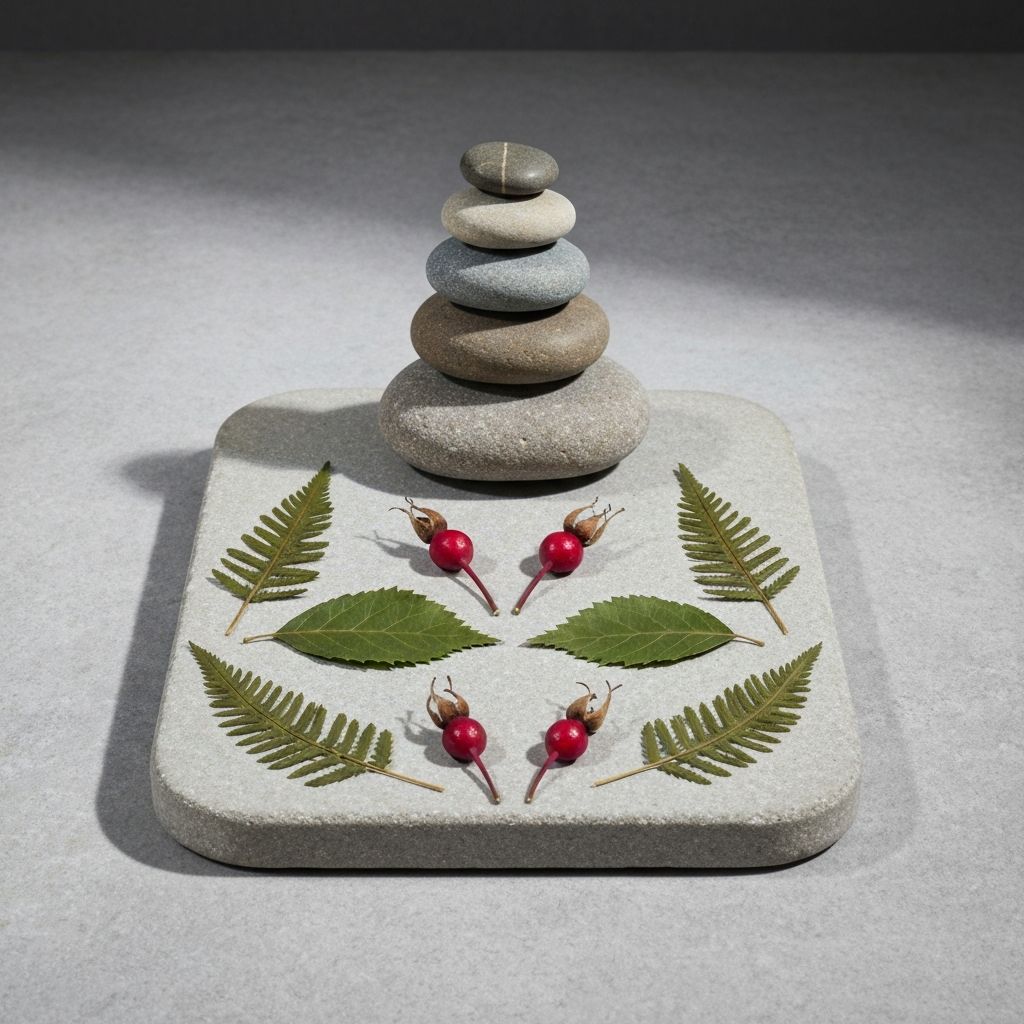
Balance as an Idea, Not a Formula
The idea of a balanced life is one of the most persistent themes in human thinking about how to live well. It appears in the ancient Greek notion of the "golden mean," in Confucian principles of harmonious relationships, in Ayurvedic frameworks of bodily equilibrium, and in contemporary psychological concepts of work-life integration. Despite its ubiquity, "balance" resists easy definition. What it means to live in balance differs substantially across individuals, cultures, and life stages.
This article approaches the concept descriptively. It does not offer a prescription for achieving balance, nor does it suggest that any one framework is more valid than another. Instead, it explores the dimensions that various traditions and contemporary approaches have identified as relevant to the experience of a balanced life.
"In all things, let reason be your guide — not the passions of the moment, but the sustained consideration of what a good life requires."
— Paraphrase of Stoic principleThe Dimensions Most Frequently Referenced
When discussions of balance appear across traditions and frameworks, they tend to cluster around a relatively consistent set of dimensions. These are not universally agreed upon, and their relative weight differs across perspectives. Nevertheless, they represent useful categories for understanding what "balance" typically refers to.
Physical Well-Being and Activity
Perhaps the most intuitive dimension of balance involves the body. Movement, rest, nourishment, and the management of physical energy appear in virtually all frameworks for a balanced life. The specifics vary enormously — what constitutes adequate movement, sufficient rest, or appropriate nourishment differs across cultures, life stages, and individual constitution — but the underlying principle of attending to the body as a foundational element of broader well-being is consistent.
Mental Engagement and Cognitive Life
Many frameworks for balanced living include a dimension related to intellectual or cognitive engagement — the idea that a well-rounded life involves not just physical activity and social connection, but also the exercise of one's capacity for thought, learning, and creative expression. Whether through formal education, reading, artistic practice, or the sustained engagement with complex problems, this dimension speaks to the human need for meaningful cognitive activity.
Emotional and Relational Life
The quality of one's relationships and the depth of emotional experience are consistently referenced as central to a sense of balance. This dimension encompasses the experience of meaningful connection with others, the capacity to give and receive support, and the development of emotional awareness and resilience. Many traditions suggest that isolation — whether chosen or imposed — tends to undermine the broader experience of well-being, regardless of achievements in other dimensions.
Purpose and Meaning
Across philosophical and spiritual traditions, the experience of purpose — a sense that one's activities connect to something meaningful — is described as essential to a genuinely balanced life. This dimension is perhaps the most difficult to operationalize, as what constitutes meaning varies profoundly across individuals. Nevertheless, its presence or absence is widely understood to color the experience of all other dimensions.
Rest and Restoration
The dimension of rest — which encompasses not only sleep but also periods of quietness, play, and disengagement from effortful activity — is consistently identified as necessary for the sustainability of engagement in all other dimensions. Without adequate restoration, the capacity for physical activity, mental engagement, emotional presence, and purposeful action tends to diminish.
The Tension Within Balance
One of the most interesting aspects of the concept of balance is that it is inherently dynamic. Balance is not a static state to be achieved and maintained, but a continuous process of adjustment — responding to the changing demands of different life phases, circumstances, and priorities.
This dynamic quality means that the experience of imbalance is not a sign of failure, but a natural feature of the process. Periods of intense focus on one dimension — a demanding project at work, the arrival of a new family member, a period of personal crisis — necessarily involve a relative de-prioritization of others. The relevant question is not whether imbalance occurs, but how one relates to and responds to it over time.
The Static View
Balance as an equal distribution of time and energy across all life dimensions — a fixed ideal to be maintained.
The Dynamic View
Balance as a continuous process of recalibration — a capacity for returning to one's priorities after periods of necessary deviation.
Cultural Variations in the Understanding of Balance
It is worth noting that the concept of balance is not culturally uniform. Western traditions have often emphasized individual autonomy and self-determination as the basis for a balanced life — the idea that one actively arranges one's circumstances to achieve equilibrium. Many Eastern traditions, by contrast, place greater emphasis on alignment with natural rhythms, social harmony, and the acceptance of what cannot be controlled as preconditions for balance.
Indigenous frameworks often describe balance in ecological terms — as a right relationship not only between different aspects of personal life but between the individual and the natural world. This relational and environmental dimension of balance is frequently absent from contemporary personal development discourse, which tends to focus on the individual as the primary unit of analysis.
These differences are not merely academic. They suggest that the experience of balance — and the strategies through which it is sought — cannot be meaningfully understood without reference to the cultural contexts that give it meaning.
This material is for informational purposes only. It does not constitute individual recommendations, nor does it guarantee specific outcomes. Approaches to personal well-being vary widely, and this information should not replace personal decisions or professional advice.